Navigating search engine optimization requires moving beyond traditional blue-link tactics. Generative Engine Optimization (GEO) focuses on getting content ingested, parsed, synthesized, and cited directly within AI answer engines like ChatGPT, Google Gemini, Perplexity, and Claude.


What are the key metrics for measuring AI search optimization
Traditional metrics like click-through rates (CTR) and keyword rankings fail to capture AI search visibility. Success in generative search centers on citations, entity presence, and direct inclusion.
| Metric | Category | Primary Focus |
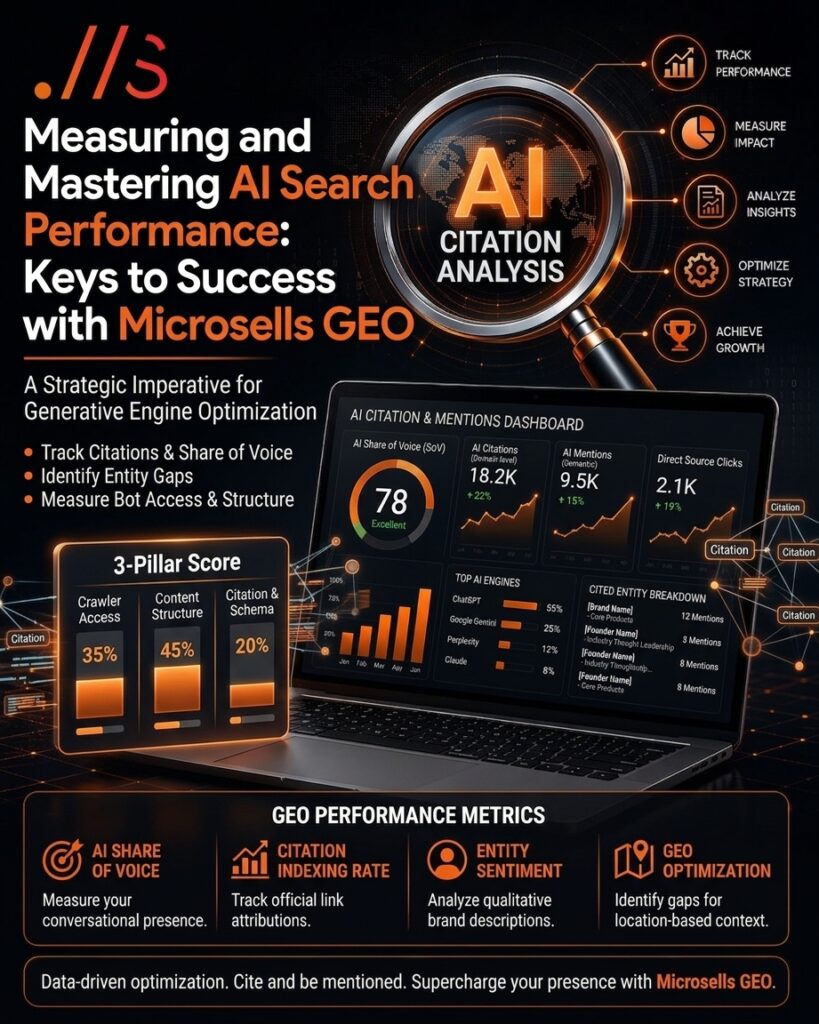
| AI Share of Voice (SoV) | Brand Awareness | Percentage of target conversational prompts where your brand or URL is generated in the answer. |
| Citation Rate & Indexing | Visibility & Authority | Frequency at which AI engines list your domain as an official source attribution link. |
| Entity Sentiment & Accuracy | Brand Equity | Qualitative accuracy and sentiment of how LLMs describe your products or services. |
| Sub-Query / Fan-Out Coverage | Content Depth | Rate at which your pages answer the granular underlying queries AI engines run behind the scenes. |
| LLM Crawler Access | Technical Health | Success rate of dedicated AI bots (GPTBot, ClaudeBot, PerplexityBot) accessing your pages without blocking. |
What are the Essential Tools for AI Search Performance
Optimizing for generative search demands specialized tools designed to measure how large language models read and attribute web sources.
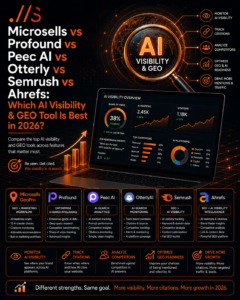
- Microsells GEO (GeoPro): A comprehensive platform engineered specifically for generative engine optimization and AI readiness.
- LLMrefs: Tracks brand mentions, competitive positioning, and referral links across multiple generative platforms.
- Peec AI: Monitors prompt-level visibility, brand sentiment, and citation share.
- Profound: Designed for enterprise tracking of generative presence and conversational Share of Voice.
How the Solution works: Microsells GEO
Microsells GEO (part of the GeoPro suite) serves as a dedicated platform for brands aiming to build, track, and sustain visibility within AI engines.
[ URL / Domain Audit ] ──► [ 3-Pillar Score ] ──► [ AI Query Simulator ] ──► [ Citation Output ]
What are the Core Features for GEO & AI Optimization
- 3-Pillar AI Readiness Score:Evaluates sites out of 100 based on weighted metrics
- AI Bot Crawler Checker: Audits
robots.txtand edge rules to ensure bots likeGPTBot,ClaudeBot, andPerplexityBotare not inadvertently blocked from indexing your site. - AI Query Simulator:Uncovers sub-queries and fan-out background searches executed by ChatGPT and Gemini, allowing optimization for the exact queries feeding the primary answer.
- Citation & Competitor Tracker: Pinpoints which domains earn citations for specific prompt clusters and flags competitors claiming space in your niche.
- Schema & Content Generation:Automatically drafts high-density, fact-rich content structures, FAQPage JSON-LD, and
LLMS.txtfiles to maximize machine readability.
What is the Action Plan to Drive AI Engine Citations
- Unblock AI Crawlers:Check server logs and CDN settings to ensure AI user-agents can access raw HTML content.
- Structure for Extraction:Position key facts, direct answers, and data points within the first 100 words of every section.
- Deploy Machine-Readable Schema:Implement standard
Article,FAQPage, andOrganizationJSON-LD markup across key properties. - Audit via Microsells GEO:Run full URL scans to surface uncited statistics, structural weaknesses, and missing schema gaps.