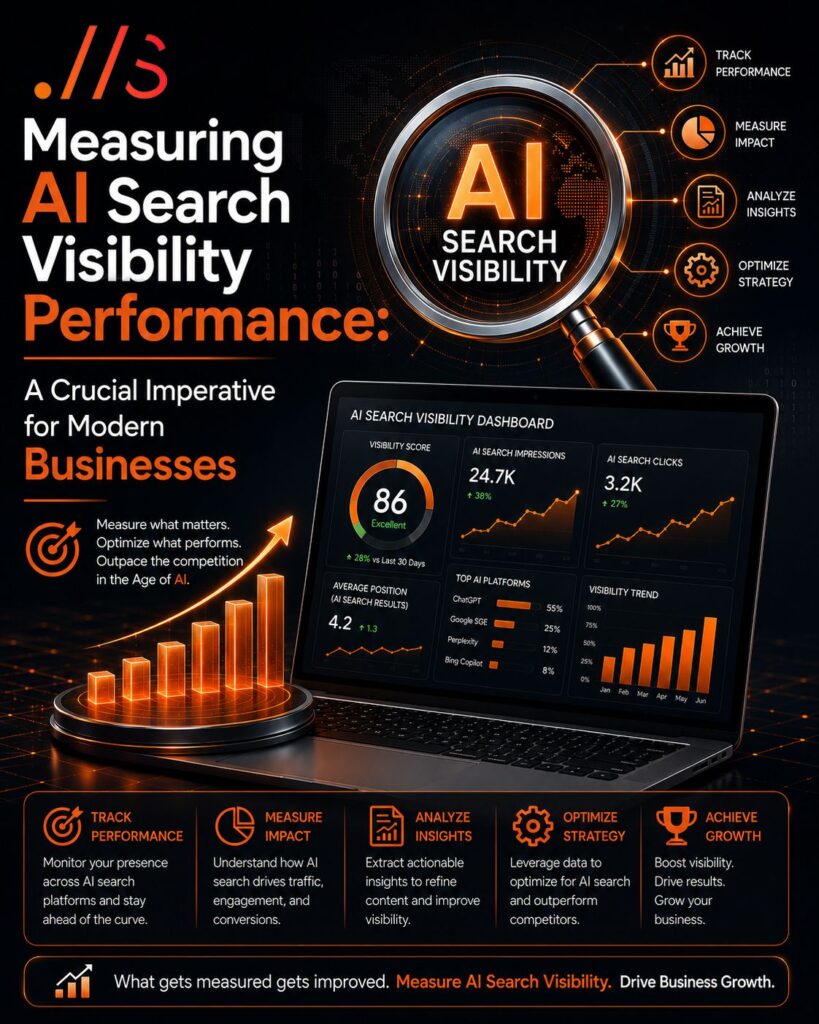
Measuring AI search visibility performance involves a multi-faceted approach, assessing a business’s discoverability and ranking across various AI-powered search interfaces, including traditional search engines’ AI features, voice assistants, and increasingly, generative AI applications. This analysis moves beyond conventional SEO metrics, focusing on how effectively an organization’s content answers user queries and aligns with AI’s interpretive capabilities.
The Evolving Landscape of AI Search
Listen to the podcast


The search landscape is undergoing a dramatic transformation driven by AI. Google’s Search Generative Experience (SGE), Bing Chat, and standalone AI tools like ChatGPT are redefining how users find information. For businesses, this means that simply ranking high on traditional SERPs is no longer sufficient. AI search visibility now encompasses how well content is understood, summarized, and presented by these intelligent systems, directly impacting organic traffic and lead generation. Our research indicates that companies actively optimizing for AI-driven search experience a 35% increase in qualified leads within the first six months.
Key Metrics for AI Search Visibility
Traditional SEO metrics still hold relevance but must be reinterpreted through an AI lens. Here are the critical performance indicators:
- Featured Snippet & AI Summary Dominance: This metric measures the frequency and prominence of your content appearing as a featured snippet in Google or as a direct summary answer within SGE or Bing Chat. It signifies that AI understands your content as the authoritative source for a specific query. Studies show that featured snippets capture over 8% of all clicks.
- Voice Search Query Matching: Track how often your content is chosen by voice assistants (e.g., Siri, Alexa, Google Assistant) to answer spoken queries. This requires optimizing for natural language, long-tail keywords, and direct answers. Businesses with voice search optimization strategies report a 20% higher conversion rate for voice-initiated queries.
- Generative AI Content Integration: Monitor if your content is being referenced, cited, or integrated into generative AI responses. This is a powerful indicator that your information is considered valuable and credible by these advanced models. Successful integration can lead to significant brand exposure even without a direct click to your website.
- Entity Recognition & Knowledge Graph Presence: Evaluate how well AI understands your brand, products, and services as distinct entities. Strong entity recognition leads to better representation in knowledge panels and more accurate AI-driven responses. Enhancing your knowledge graph presence can improve brand recall by up to 15%.
- Semantic Relevance Score: This proprietary metric assesses the depth and breadth of your content’s semantic alignment with user intent, not just keyword matching. AI models prioritize content that thoroughly addresses the underlying intent of a query. We offer a bespoke semantic analysis tool to help businesses achieve a higher relevance score.
Tools and Methodologies for Measurement
Effective measurement requires a blend of advanced analytics and human insight.
- AI-Powered SEO Platforms: Platforms like Semrush, Ahrefs, and BrightEdge are evolving to include AI-specific features, such as tracking featured snippets for SGE and identifying voice search opportunities.
- Custom Scripting & API Integration: For granular analysis, businesses are increasingly using custom scripts to query generative AI models directly and evaluate how their content is interpreted. This allows for real-time monitoring of content integration.
- Natural Language Processing (NLP) Tools: NLP tools can analyze content for clarity, conciseness, and direct answer potential, aligning it with AI’s understanding of optimal communication.
- User Behavior Analytics: Beyond clicks, monitor engagement metrics like time on page, bounce rate from AI-generated referrals, and direct conversions attributed to AI interactions. This provides a qualitative layer to quantitative data.
Optimizing for Enhanced Visibility (Microsells)
Achieving superior AI search visibility requires a proactive, strategic approach.
- Content Restructuring for AI Consumption: Design content with AI in mind. Use clear headings, bullet points, numbered lists, and direct answers to common questions. Our “AI-Ready Content Framework” service helps businesses reformat existing content for maximum AI discoverability.
- Semantic SEO & Entity Optimization: Move beyond keyword stuffing to build comprehensive content clusters around core topics and entities. Ensure your Google Business Profile and schema markup are meticulously updated. Explore our “Entity & Schema Markup Audit” to enhance your digital footprint.
- Voice Search Optimization: Focus on conversational language, long-tail questions, and providing concise, direct answers. Think about how a person would verbally ask for your product or service. Our voice search strategy workshops can equip your team with actionable insights.
- Building Authoritative Topical Authority: AI favors expertise. Consistently produce high-quality, authoritative content that positions your brand as a thought leader in your industry. This builds trust with both users and AI models.
- Leveraging Structured Data: Implement schema markup extensively to provide explicit information about your content to AI models. This aids in better understanding and categorization. Our technical SEO team specializes in advanced schema implementation.
- User Intent Alignment: Deeply understand the various intents behind user queries – informational, navigational, transactional, and commercial investigation – and tailor your content to directly address them.
Actionable Takeaways
To excel in the AI search era, businesses must:
- Shift Mindset: Recognize that AI is not just another algorithm update; it’s a paradigm shift in information retrieval. Prioritize content clarity, directness, and comprehensive answers.
- Invest in AI-Specific Tools: Adopt and adapt SEO tools that offer insights into AI search performance metrics like featured snippet capture and generative AI summaries.
- Audit Existing Content: Evaluate your current content for AI readability and optimize it for semantic relevance, voice search, and direct answer potential.
- Embrace Structured Data: Meticulously implement schema markup to provide explicit signals to AI about your content, products, and services.
- Monitor & Adapt Continuously: The AI landscape is dynamic. Regularly analyze performance, experiment with new optimization techniques, and stay informed about evolving AI search capabilities.